
Solar driveways are turning heads across the US. Imagine your driveway helping to pay your electric bill while boosting curb appeal. See real-world prices, options, and how they perform year-round.
Why Everyone’s Talking About Power‑Generating Driveways
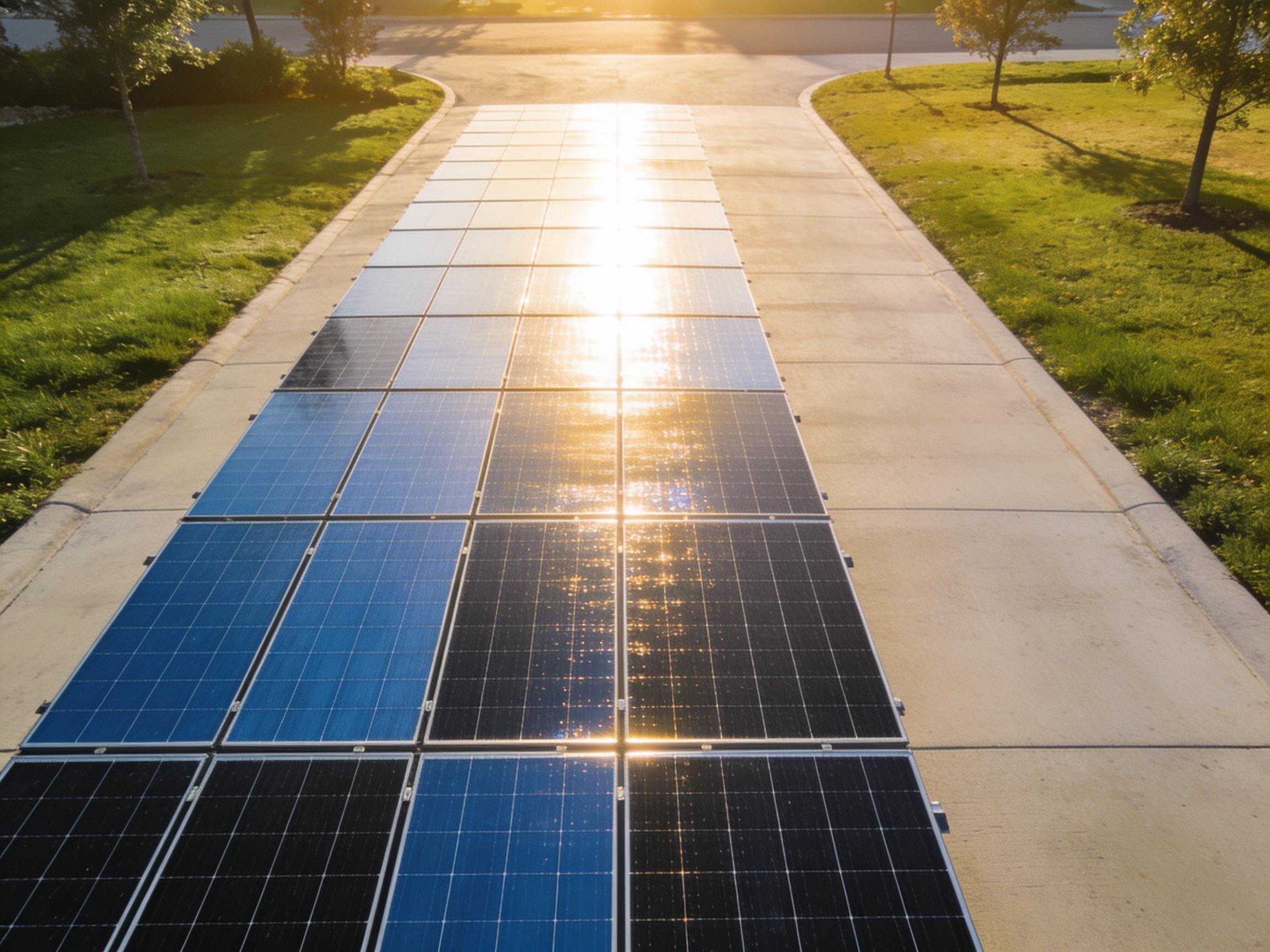
You’ve seen the ads: “Solar Driveways are turning heads! (see prices)”—and for good reason. By embedding photovoltaic (PV) modules into rugged pavers or surface panels, homeowners can turn an underused surface into an energy asset. The idea marries two goals at once: a premium-looking driveway and clean electricity that can offset household usage or charge an EV.
To ground the buzz, start with the basics. “Solar” simply relates to the sun, as defined by Merriam-Webster. Solar electricity is captured by PV cells, a topic the U.S. Department of Energy explains broadly here: Solar Energy. For a concise primer on how sunlight becomes power on your property, refer to the EIA: Solar Explained and the overview on Solar power.
How Solar Driveways Work (And What Sets Them Apart)
Solar driveways use durable, textured glass or composite surfaces laminated over PV cells. Beneath the surface, interlocking modules connect to weatherproof junctions that tie into an inverter and your home’s electrical panel. The best systems are designed to:
- Handle vehicle loads: Ratings often target passenger cars and light trucks with compressive strengths similar to premium pavers.
- Maintain traction: Textured, anti-slip top layers preserve grip in rain and light snow.
- Shed water or melt ice: Some designs integrate drainage bases or leverage dark surfaces to warm faster in winter sun.
- Blend with design: Options include sleek black tiles, patterned edges, or mixed fields with standard pavers.
Power output varies by footprint, orientation, shading, and climate. As a directional rule, expect less production per square foot than a rooftop array because driveways typically have more shade and suboptimal tilt. Still, the energy adds up—especially on larger pads, south-facing slopes, or paired with a carport.
See Prices: Realistic Options and Estimated Costs
Below is a curated snapshot of options and estimated installed pricing. Figures reflect typical ranges shared by manufacturers, pilot project budgets, and U.S. installer quotes from recent years. Final pricing will vary by design, permitting, trenching distance, electrical upgrades, and snow-load/temperature requirements.
| Option / Brand | Typical Installed Price | Notes / Where Available |
|---|---|---|
| Platio Solar Pavers (Driveway configuration) | $150–$220 per sq ft | U.S. distributors; suitable for light-vehicle driveways; common in major metros (NYC, Los Angeles, Miami) |
| Wattway by Colas (Pilot retrofit panels) | $250–$400 per sq ft | Pilot-scale in the U.S.; better for demonstration or specialty use |
| Solar Roadways SR panels (Residential prototypes) | $300–$500 per sq ft | Prototype/limited availability; HQ in Idaho; early adopters only |
| Premium concrete driveway + rooftop PV (SunPower/Qcells) | Driveway $12–$22 per sq ft + PV $2.50–$4.00 per W | Nationwide; strong energy yield from rooftop while keeping classic driveway look |
| Permeable pavers (Belgard) + solar carport (Lumos/SunPower) | Driveway $18–$35 per sq ft + Carport $20k–$35k | Popular in CA, AZ, TX, FL; combines stormwater control with covered PV parking |
| Hybrid: Solar paver apron + standard concrete field | $80–$160 per sq ft (solar area only) | U.S. custom installers; concentrates PV where sun is best, lowers total cost |
| Snow-belt package: Standard driveway + PV + snow-melt zones | Driveway $12–$22 per sq ft + Heat $25–$50 per sq ft + PV $2.50–$4.00 per W | Common in Denver, Minneapolis, Buffalo; balances safety and energy |
Tip: After reviewing ranges, compare binding quotes from vetted providers at Solar.com to validate pricing in your market.
What Drives Cost (Beyond Tile Price)
Several elements influence the bottom line:
- Electrical scope: Long trenching runs, new subpanels, or whole‑home load upgrades increase cost.
- Base prep: Soil corrections, drainage layers, and compaction for heavy vehicles add labor.
- Snow and climate: Cold-weather cable protection and de-icing considerations affect materials.
- Shading: If trees or structures block sun, you may need module-level power electronics to reduce losses.
- Aesthetics: Borders, patterns, and integrated lighting raise material and install time.
Energy Yield, Incentives, and Payback
Solar driveway production depends on sunlight access. In sunny regions, a 200–400 sq ft active PV area can contribute meaningfully to household energy, though typically less efficiently than a pitched rooftop. The federal Residential Clean Energy Credit currently allows a 30% credit for qualifying PV costs through 2032; consult a tax professional to determine eligibility for ground-integrated PV on your property. State and utility incentives can further improve ROI. For foundational policy reading, bookmark DOE’s Solar Energy topic page and the EIA: Solar Explained resource.
Pros, Cons, and Who It’s Best For
- Standout curb appeal: A sleek, power-producing surface makes a home look future-forward.
- Dual function: Surfaces you already maintain now generate kilowatt-hours.
- Snow strategy: Dark PV surfaces can warm quicker under winter sun; optional heated zones add safety.
- Premium cost: Square-foot pricing is higher than rooftop PV; per-watt costs can be significantly more.
- Shading limits: Nearby trees or structures can reduce output unless carefully designed.
Best fits include: sun-exposed driveways without heavy shading, homeowners prioritizing design and innovation, EV owners who value driveway charging, and projects that already require driveway replacement—letting you bundle labor and permitting.
Installation Steps and Timeline
A typical project runs 4–8 weeks end-to-end:
- Site survey and design: Shade study, layout, structural base design, and electrical plan.
- Permitting and utility paperwork: Local building permits plus interconnection with your utility.
- Base prep and conduits: Excavation, compaction, drainage base, and protected electrical runs.
- Panel/paver laydown: Interlocking modules installed with weatherproof connectors.
- Commissioning: Inverter start-up, inspections, and utility meter swap (if net metering applies).
Local Fit: Is a Solar Driveway Right for You in Columbus?
Use a quick checklist before requesting quotes in Columbus:
- Sun access: At least 4–6 sun hours across your target area, especially around midday.
- Slope and drainage: Ensure proper pitch and base design to avoid pooling or frost heave.
- Electrical capacity: Confirm room in your service panel and a clean path for conduits.
- HOA/Design rules: Verify finish, reflectivity, and lighting guidelines.
- Budget and incentives: Align scope with rebates, tax credits, and your payback expectations.
How to Compare Quotes Confidently
Request itemized proposals separating driveway civil work, PV hardware, electrical labor, and optional heated zones. Insist on:
- Load ratings and certifications: Vehicle class, slip resistance, and impact ratings.
- Warranty terms: Separate product, power output, and workmanship warranties.
- Energy modeling: Annual kWh estimate based on your exact shade profile.
- Service plan: Access to replacement tiles and local support response times.
Gather at least three bids; compare against a conventional driveway plus rooftop or carport PV to validate value. For streamlined, apples-to-apples solar pricing, you can also explore Solar.com.
The Bottom Line
Solar driveways are turning heads because they merge design and function in a way homeowners can see and feel every day. If your site has good sun and you’re already upgrading the driveway, the premium can make sense—especially when incentives and EV charging convenience enter the equation. Use the pricing table above as a reality check, dive deeper with authoritative resources from the DOE and EIA, and compare quotes until the numbers and the aesthetics line up. That’s how a driveway becomes a conversation piece—and a quiet power plant.